
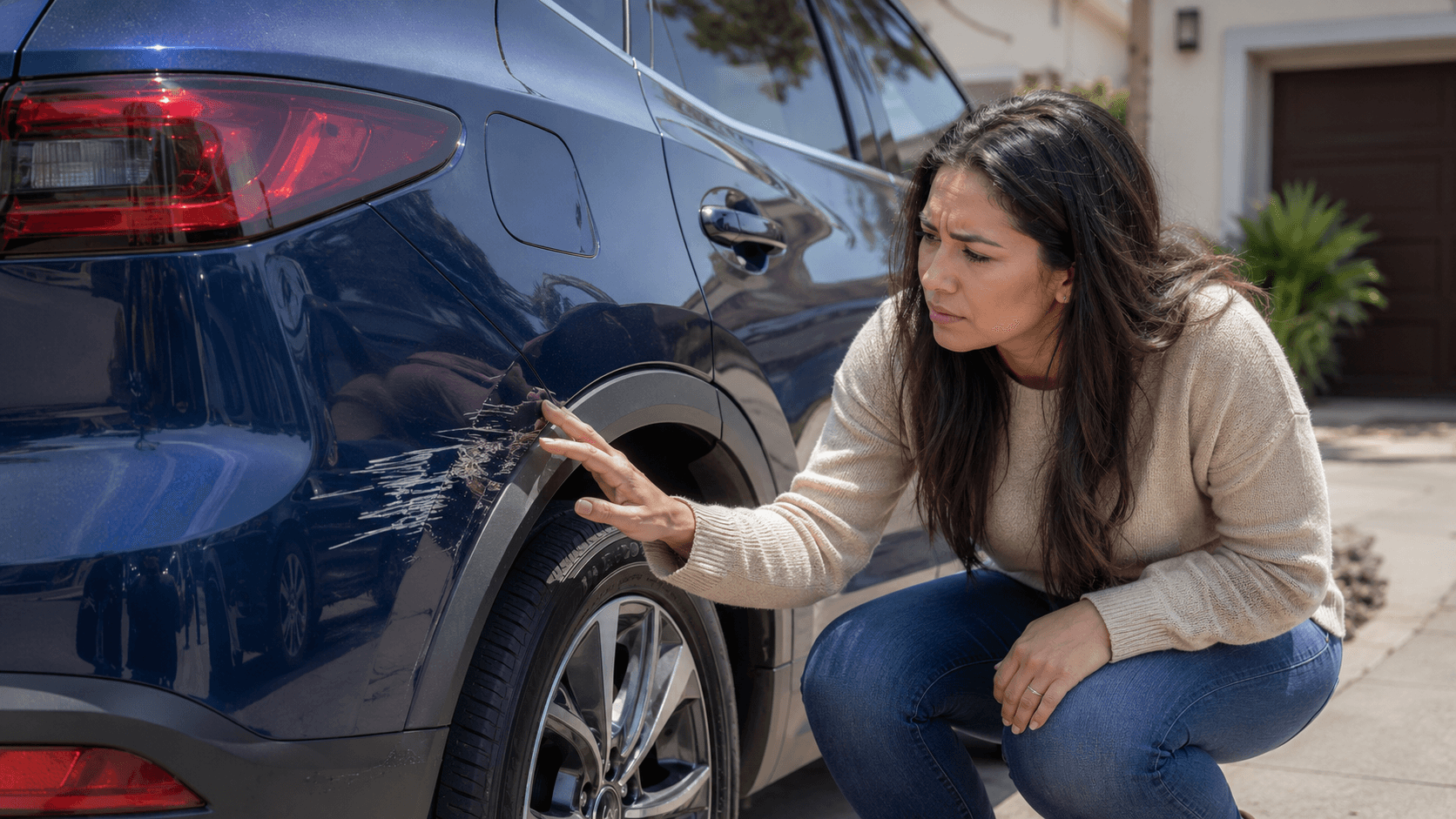
What Kind of Paint Repair Does Your Car Actually Need?
Not all paint damage needs the same repair. Learn how scratches, chips, scuffs, paint transfer, and peeling paint can require anything from a simple touch-up to a full-panel repaint.
Quick Answer
The right paint repair depends on what type of damage is present, how deep it goes, how large the affected area is, and where it is located on your vehicle.
A small paint chip may only need touch-up paint. Paint transfer or a light scuff may be removable without repainting. Deeper scratches can require spot paint repair or refinishing, while widespread peeling, clear-coat failure, or larger damaged areas may require a full-panel repaint.
The important part is identifying the damage correctly before deciding how it should be repaired.
Not Every Paint Problem Needs a Repaint
Seeing damaged paint does not automatically mean an entire panel needs to be repainted.
Some of the most common paint issues can be handled with much smaller repairs.
For example:
- A small chip may need touch-up paint.
- Paint transferred from another object may simply need to be removed.
- A light scratch may only affect the clear coat.
- A deeper scratch may require new paint.
- A larger damaged area may need refinishing.
- Peeling or failing paint may require repainting a larger section.
The difference can have a major impact on both the repair process and the expected cost.
That is why the first question should not simply be, "Where should I take my car?"
It should be, "What kind of damage do I actually have?"
How to Think About Your Paint Damage
You do not need to become an automotive paint expert to get a better idea of what your vehicle may need.
Start by looking at a few basic characteristics.
1. Look at the Size of the Damage
Is it one small chip or scratch, or does the damage cover a noticeable portion of the panel?
Small, isolated damage generally creates more opportunities for a targeted repair.
As the affected area becomes larger, refinishing a larger section of the vehicle may become necessary.
2. Look at How Deep It Appears
Depth is one of the biggest factors in determining the repair.
Your vehicle's exterior finish consists of multiple layers. Damage may affect only the clear coat, extend into the colored paint, or go through the paint completely.
A scratch that stays near the surface can require a very different repair from one that exposes a layer underneath.
3. Consider Where the Damage Is Located
Location matters too.
Damage in the middle of a large panel may be approached differently than damage near an edge, body line, bumper, or neighboring panel.
The repair also needs to blend properly with the surrounding finish.
4. Look for Damage Beyond the Paint
Sometimes the paint is only part of the problem.
A bumper may have a deep gouge underneath a scrape. A painted panel may also be dented. What appears to be paint damage may involve the underlying surface as well.
When that happens, paint repair alone may not completely address the issue.
When Touch-Up Paint Makes Sense
Touch-up paint is typically best for small areas where paint is missing, such as individual chips or very small scratches.
Common examples include:
- Small rock chips
- Isolated paint chips
- Tiny areas of exposed paint
- Certain small scratches
Touch-up paint is generally a practical repair rather than the same refinishing process used to repaint a larger area.
For the right type of minor damage, that may be all the vehicle needs.
The mistake is assuming that every small scratch should automatically receive touch-up paint. A scratch can look small while still extending through enough of the finish to require a different repair.
What About Paint Transfer and Scuffs?
Paint transfer can make damage appear worse than it actually is.
It occurs when material from another painted object is deposited onto your vehicle's surface during contact.
For example, after a minor scrape, you may see another color across the vehicle and assume your own paint has been removed.
Sometimes much of what you are seeing is actually sitting on top of your existing finish.
Depending on the damage underneath, the repair may involve:
- Paint-transfer removal
- Scuff repair
- Clear-coat scratch repair
- Additional paint repair if the original finish was damaged
This is one of the clearest examples of why identifying the damage before choosing a repair matters.
When Does a Scratch Need Paint Repair?
Not all scratches penetrate the vehicle's finish to the same depth.
Clear-Coat Scratches
Some scratches primarily affect the transparent clear coat above the vehicle's color.
These may appear as lighter lines or marks without exposing another layer underneath.
Depending on their depth, they may be candidates for clear-coat scratch repair rather than repainting the panel.
Deeper Paint Scratches
A deeper scratch can cut through the clear coat and into the actual color layer.
Signs that a scratch may be deeper include:
- A visibly different color inside the scratch
- Exposed material underneath the paint
- A scratch that appears sharply defined
- Missing paint along part of the damaged area
Depending on the size and location, repairs can range from touch-up paint to spot paint repair or larger-area refinishing.
Long or Key Scratches
Long scratches introduce another issue: even if the damaged line is relatively narrow, it may extend across a large part of the panel.
That can make a smaller repair more difficult to blend cleanly.
Some may be repairable within a limited area, while others may justify refinishing more of the panel.
When Spot Paint Repair May Be the Better Option
Spot paint repair sits between a simple touch-up and repainting an entire panel.
It can make sense when the damage is too significant for touch-up paint but still concentrated within a relatively small area.
Examples may include:
- Certain deeper scratches
- Small areas of missing paint
- Localized bumper paint damage
- Small scraped areas
- Damage covering more area than a typical chip
The damaged area is prepared, painted, and blended into the surrounding finish.
Whether spot repair is appropriate depends on factors such as:
- Damage size
- Damage location
- Paint color
- Panel shape
- Condition of the surrounding paint
- Desired finished appearance
That is why two visually similar scratches do not always receive the same repair.
Bumper Paint Damage Can Require a Different Approach
Painted bumpers commonly experience:
- Scuffs
- Scratches
- Paint transfer
- Chips
- Scrapes
- Gouges
If the damage is limited to the painted finish, bumper paint repair may be enough.
However, if the bumper itself is cracked, distorted, gouged, or otherwise damaged beneath the paint, the underlying bumper may also need repair.
This distinction matters because repainting a physically damaged bumper does not address the damage underneath.
What If the Paint or Clear Coat Is Peeling?
Peeling paint or clear coat is different from a normal isolated chip or scratch.
It can indicate that part of the existing finish is separating or deteriorating.
Common signs include:
- Flaking clear coat
- Peeling paint
- Cloudy or deteriorated areas
- Sections where the finish is separating
- Expanding areas of paint failure
In these situations, placing touch-up paint over the visible area typically does not address the larger failing finish.
The damaged material may need to be properly prepared and refinished.
The more widespread the failure becomes, the more likely a larger section or full panel will need to be repainted.
When Is a Full-Panel Repaint Necessary?
A full-panel repaint generally becomes more appropriate when a smaller repair would not adequately restore the affected area.
This can happen with:
- Large areas of paint damage
- Long or extensive scratches
- Widespread peeling
- Significant clear-coat failure
- Multiple damaged areas across the same panel
- Large areas of missing paint
- Damage that would be difficult to blend within a smaller section
A full-panel repaint should not automatically be the answer to every paint defect.
The repair should match the actual extent of the damage and the result you are trying to achieve.
Why Choosing the Right Paint Repair Matters
Calling every defect a "scratch" or every repair a "repaint" oversimplifies the problem.
Two vehicles can have damage that looks similar from a distance while requiring very different work.
One may only need transferred material removed.
Another may need touch-up paint.
Another may need a section refinished.
And another may require repainting the entire panel.
Those differences affect:
- The repair process
- How much of the vehicle needs to be worked on
- The expected finished result
- How long the repair may take
- What the repair should cost
Understanding the damage first puts you in a much better position before contacting a business.
How VHQL Makes Paint Repair Easier to Understand
Most vehicle owners do not want to learn automotive refinishing terminology just to figure out how to fix a scratch.
They want answers to a few basic questions:
- What is damaged?
- How serious is it?
- What kind of repair does it likely need?
- What should that repair cost?
- Where should I go to get it done?
VHQL is designed around that starting point.
With a guided vehicle scan, VHQL analyzes the visible condition and helps organize information around the damaged area, type of damage, severity, appropriate repair path, and estimated cost.
Instead of beginning with a broad search and guessing which service you need, you can begin with the actual condition of your vehicle.
From there, the business can review the repair request and confirm the final price before any work begins, giving you more clarity from the start.
Start With the Damage, Not the Search
Most people begin paint repair by searching for a shop.
There is a better place to start.
- Identify the damaged area.
- Understand what type of damage is present.
- Determine the repair that fits the damage.
- Understand what you should expect to pay.
- Then choose the right business for the job.
Paint repair becomes much easier when you understand what your vehicle needs before deciding where to take it.
That is what VHQL is built to help you do.
If you are new to the platform, you can create your VHQL account. If you already have one, simply sign in to access your vehicle information.
Frequently Asked Questions
How do I know what type of paint repair my car needs?
The appropriate repair depends primarily on the type, depth, size, and location of the damage. Small chips may only require touch-up paint, while deeper scratches or larger areas of damage may require spot repair or refinishing. More extensive paint or clear-coat failure can require repainting the full panel.
Does every car scratch need to be repainted?
No. Some scratches affect only the clear coat, while others penetrate into the vehicle's colored paint. The depth, size, and location of the scratch determine whether it can receive a smaller repair or requires repainting.
Can paint transfer be removed without repainting the car?
Sometimes. If material from another object has transferred onto the surface without significantly damaging the paint underneath, it may be possible to remove the transfer without repainting. Any underlying scratches or paint loss may still require additional repair.
What is the difference between touch-up paint and spot paint repair?
Touch-up paint is typically used for very small chips or areas of missing paint. Spot paint repair is a more involved refinishing process used when damage is too significant for a basic touch-up but may not require repainting the entire panel.
When does a car need a full-panel repaint?
A full-panel repaint may be necessary when damage is large, widespread, deep, difficult to blend, or affects a significant portion of the existing finish. Extensive peeling or clear-coat failure can also make a full-panel repaint more appropriate.
Can peeling clear coat be repaired without repainting?
It depends on how extensive the failure is. Small affected areas may sometimes be refinished, while widespread clear-coat deterioration often requires more extensive preparation and repainting to properly restore the surface.
How much does car paint repair cost?
Paint repair pricing varies significantly based on the repair method, damage size, affected panel, vehicle, paint finish, local labor rates, and desired result. A small touch-up can cost considerably less than spot refinishing or repainting an entire panel.
Can VHQL tell me what paint repair my car needs?
VHQL uses a guided scan to analyze visible vehicle damage and help identify the affected area, damage type, severity, and likely repair path. The final repair method and price may still need to be confirmed by the business performing the work.